
PROGRAMME
Livelihood Development
Peace, Justice & Development
Livelihood Development is a long-term programme supporting practical skills, SHG strengthening, collective livelihood models, and local income opportunities.
Send an enquiry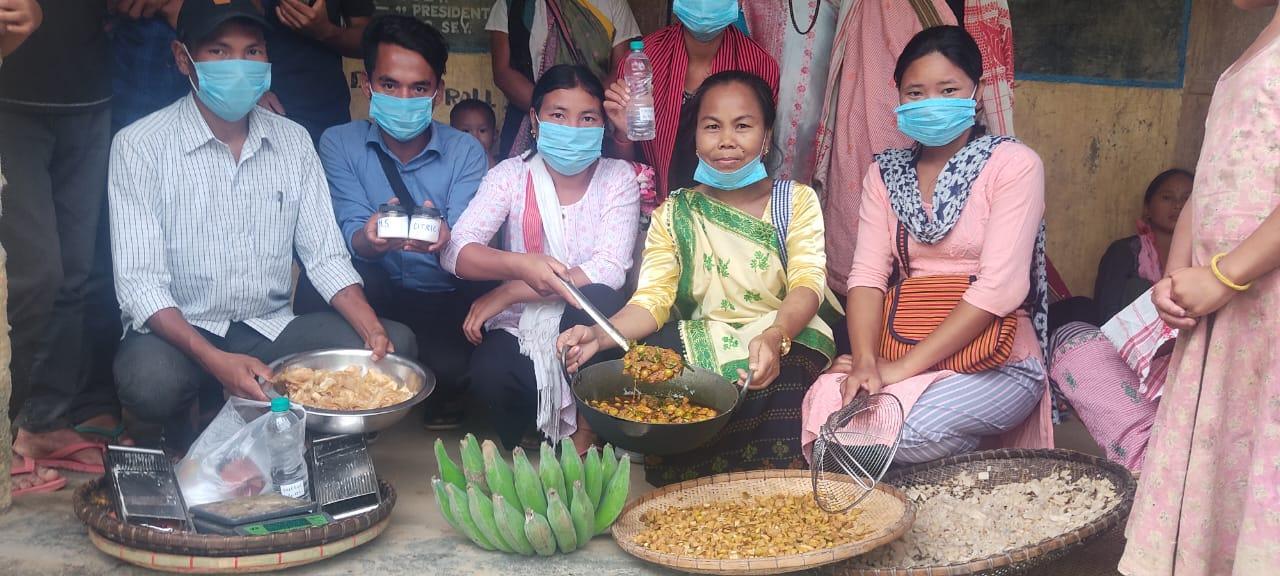
Overview
Livelihood Development is administered through Peace, Justice & Development as a long-term programme. The 2021-2024 reports document food processing, mushroom rearing, fish rearing, SHG strengthening, book keeping, silkworm rearing, organic farming, bamboo and cane craft awareness, and collective livelihood models as activities within this programme.
Timeline
Work across the years
-
2022
Organic Farming and Silkworm Rearing Training
Participants learned about silk, silkworm rearing, related schemes, and practical rearing measures. The report records seven households beginning silkworm rearing after the training.
-
2023
Book Keeping Training for Self Help Groups
SHG members received practical book keeping training to support financial records, loan readiness, and confidence in managing group funds.
-
2023
Local Food Processing Training
Forty-three participants received training in pickle making, banana chips, and juice preparation, with local food processing identified as a potential alternate source of income and collective livelihood model.
-
2023
SHG Awareness on ASRLM Schemes
In collaboration with ASRLM, participants learned about SHG schemes, funds, documentation, Ayushman Bharat card, Atal Amrit, PMJJBY, and livelihood options including pig and chicken rearing.
-
2023
Collective Livelihood Models
PO and CBO members practiced local food processing and marketing as pilot innovative models for promoting collective livelihood, including opportunities for unemployed youth.
-
2023
Fish Rearing Awareness
Community members learned about fish rearing techniques, pond management, species selection, feeding practices, disease control, and the economic potential of aquaculture.
-
2024
Mushroom Rearing Training
Two training sessions introduced mushroom cultivation, substrate preparation, inoculation, care, harvesting, food security, and income potential.
Activities
Current activities
Livelihood Development
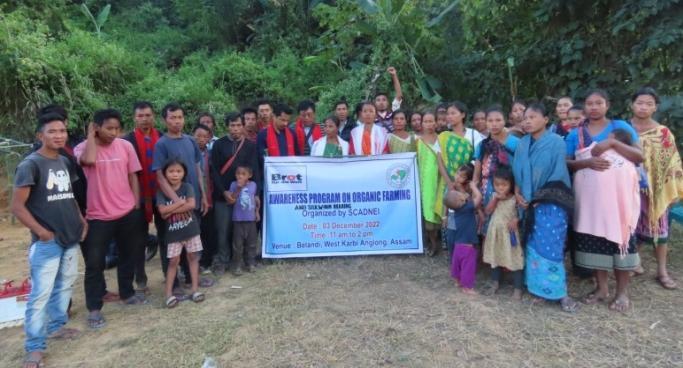
Organic Farming and Silkworm Rearing Training
December 3, 2022
Langhut
Participants learned about silk, silkworm rearing, related schemes, and practical rearing measures. The report records seven households beginning silkworm rearing after the training.
Livelihood Development
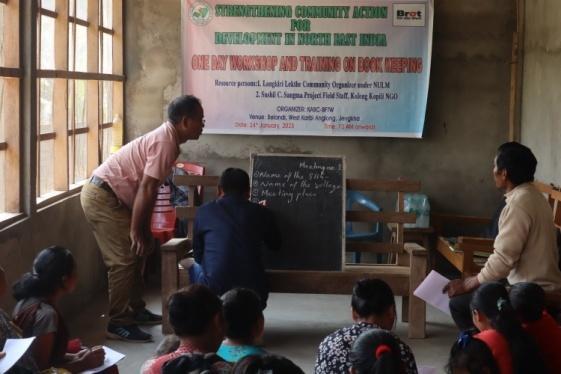
Book Keeping Training for Self Help Groups
January 24, 2023
Artubonglong
SHG members received practical book keeping training to support financial records, loan readiness, and confidence in managing group funds.
Livelihood Development
Local Food Processing Training
April 28-29, 2023
Artubonglong
Forty-three participants received training in pickle making, banana chips, and juice preparation, with local food processing identified as a potential alternate source of income and collective livelihood model.
Livelihood Development
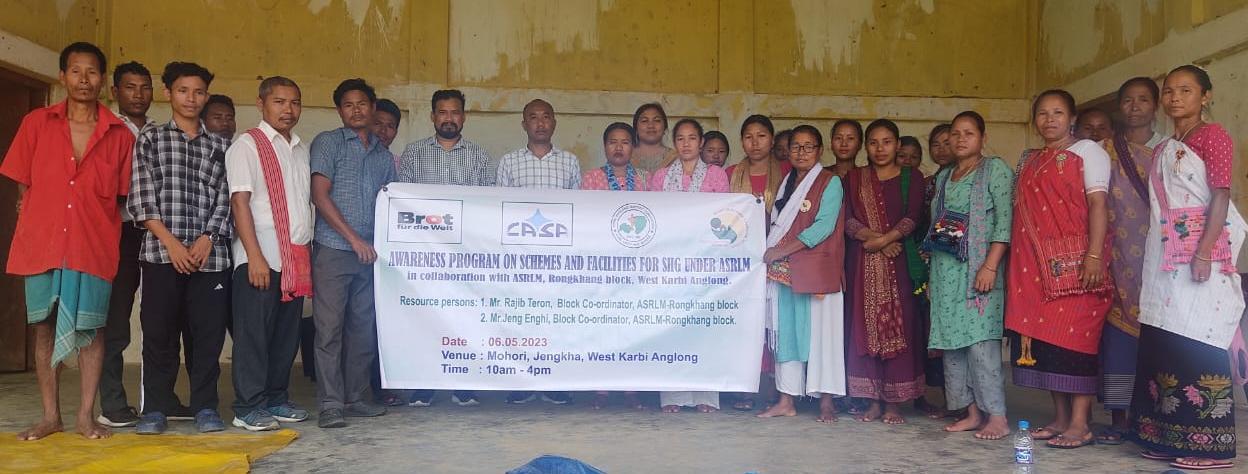
SHG Awareness on ASRLM Schemes
May 6, 2023
Mohori, Jengkha, West Karbi Anglong
In collaboration with ASRLM, participants learned about SHG schemes, funds, documentation, Ayushman Bharat card, Atal Amrit, PMJJBY, and livelihood options including pig and chicken rearing.
Livelihood Development
Collective Livelihood Models
June 6, 2023
Artubonglong, Jengkha, West Karbi Anglong
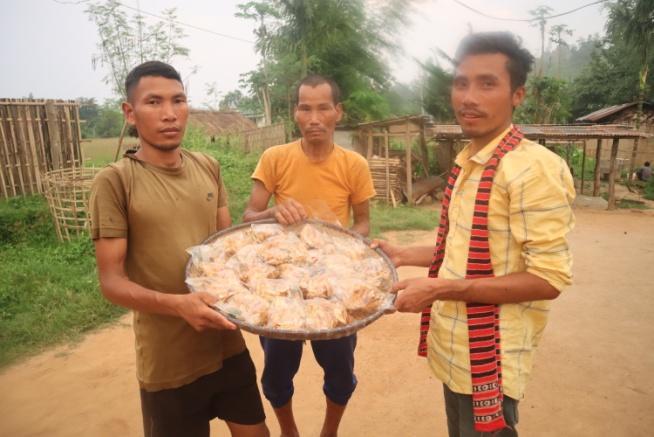
PO and CBO members practiced local food processing and marketing as pilot innovative models for promoting collective livelihood, including opportunities for unemployed youth.
Livelihood Development
Fish Rearing Awareness
September 23, 2023
Mohori, Jengkha, West Karbi Anglong
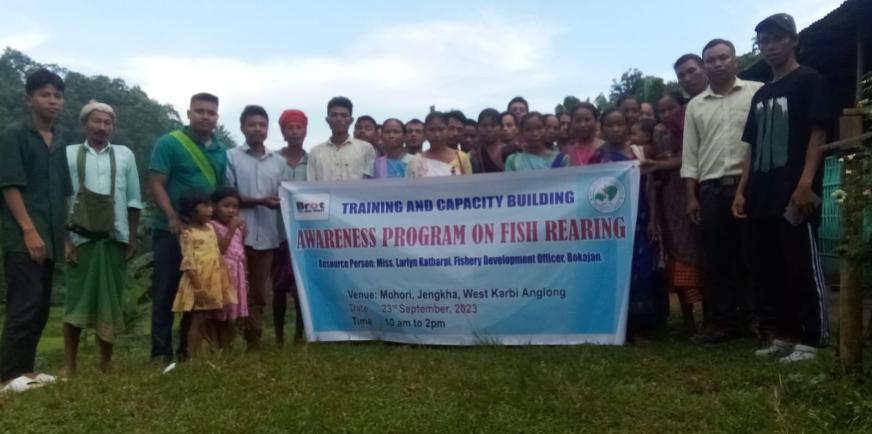
Community members learned about fish rearing techniques, pond management, species selection, feeding practices, disease control, and the economic potential of aquaculture.
Livelihood Development
Mushroom Rearing Training
February 8-17, 2024
Dera Arlok and Chengbong, Jengkha, West Karbi Anglong
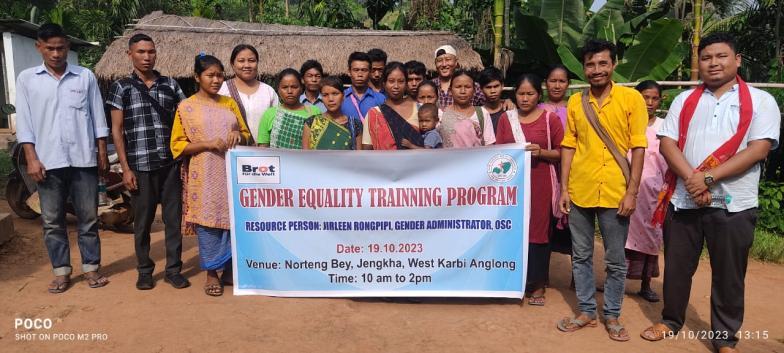
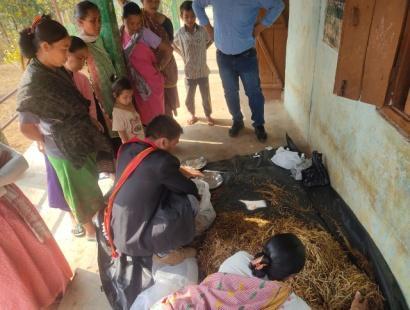
Two training sessions introduced mushroom cultivation, substrate preparation, inoculation, care, harvesting, food security, and income potential.
Latest stories
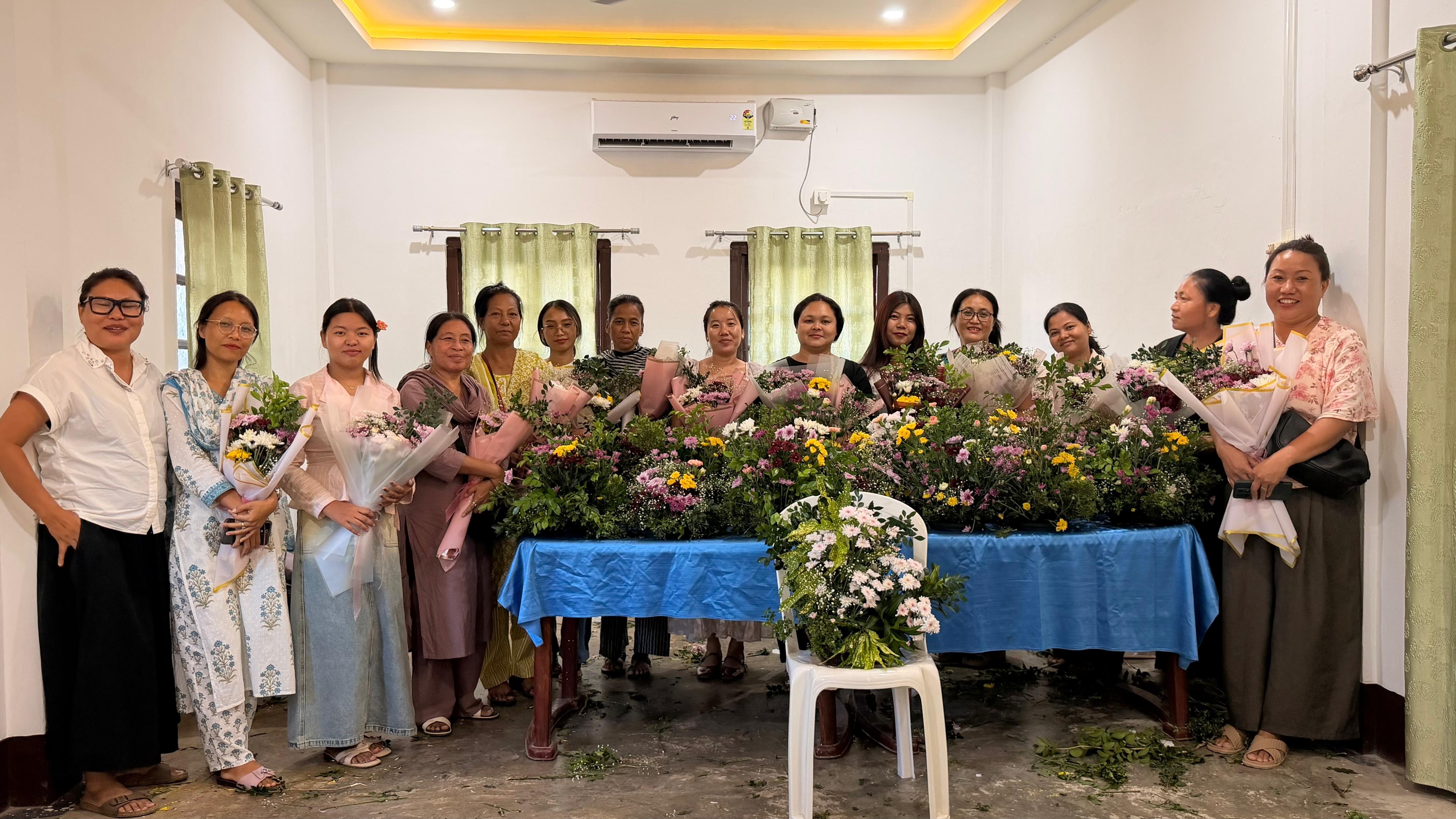
News • Aug 28, 2026
Floral Arrangement Training
The KABC Women Department organized a Floral Arrangement Training on August 28, 2026, at the KABC Youth Training Centre, Diphu, providing participants with practical, hands-on skills in floral design and arrangement....
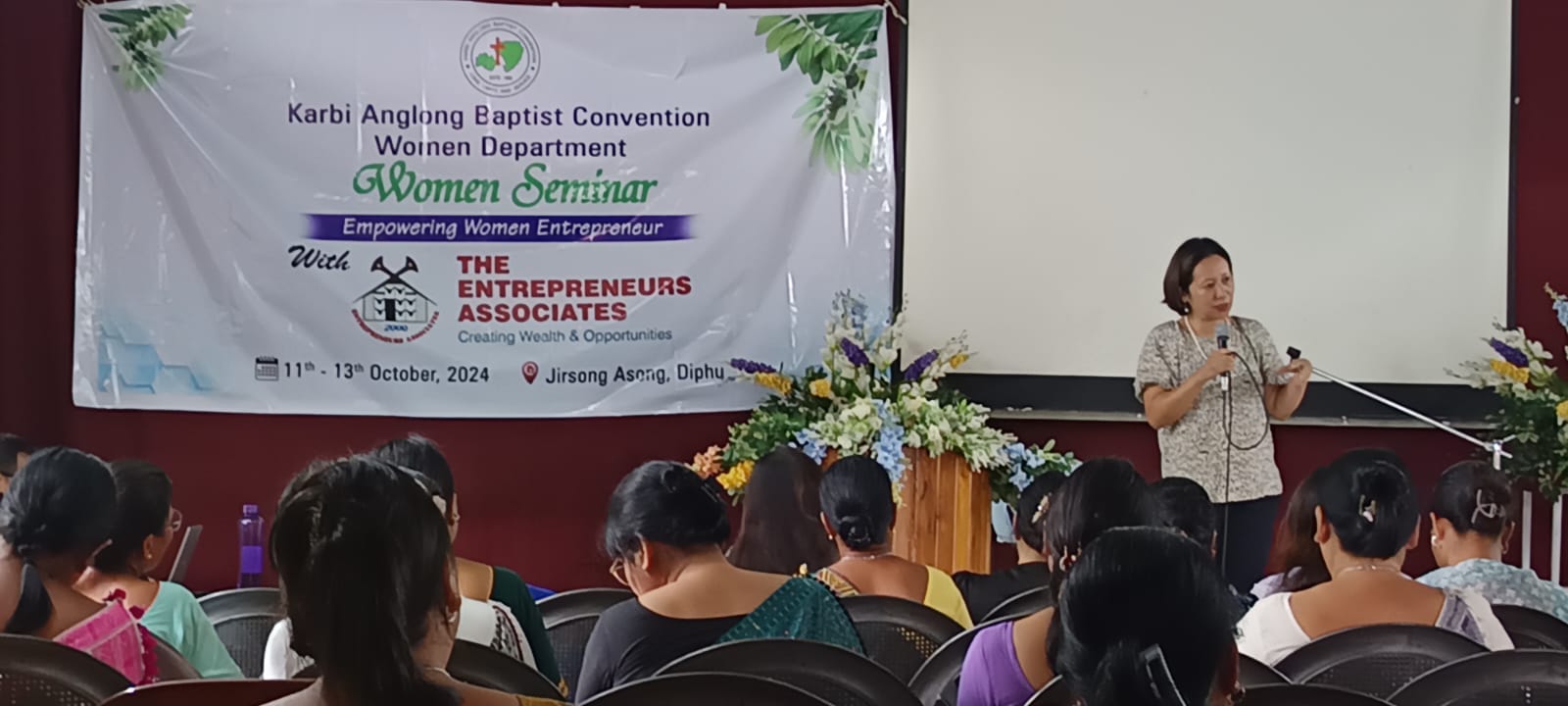
Activity report • Oct 14, 2024
Empowering Women Entrepreneurs
KABC organized a Women Seminar on Empowering Women Entrepreneurs on October 13, 2024, at the Jirsong Asong Training Centre, Rongkhelan, Diphu. The programme brought together 98 participants, including staff. The semin...
Activity report • Apr 29, 2023
Local Food Processing Training Equips Communities with Livelihood Skills
A 2023 PJD training at Artubonglong introduced local food processing as practical livelihood learning using available local resources.
Upcoming events
Learning Resources
Download
Activities Report 2021-2022
KABC activity report covering SCADNEI orientation, COVID-19 intervention, vaccination awareness, CBO leaders, village transformation, and community development capacity building.
Download
Activities Report 2022-2023
KABC activity report covering CBO and PO meetings, Sports for Peace, organic farming and silkworm rearing, women-centric schemes, book keeping, bamboo and cane craft, and village transformation.
Download
Activities Report 2023-2024
KABC activity report covering local food processing, SHG awareness, RTI awareness, book keeping, leadership, fish rearing, gender equality, mushroom rearing, village transformation, and Anti-Human Trafficking awareness.
Current work
- Food Processing
- Mushroom Rearing
- Fish Rearing
- Collective Livelihood
- SHG strengthening
- Book keeping training
- Organic farming and silkworm rearing
Ways to participate
Read report-backed livelihood stories, follow future activities, and contact KABC about responsible support for community livelihood learning.